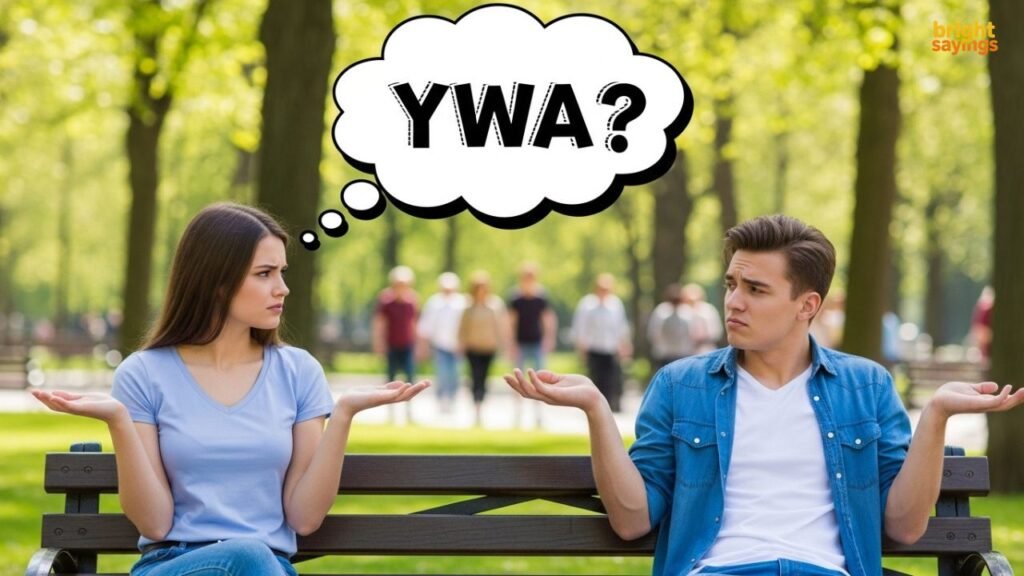
You’re scrolling through a chat, someone replies with “YWA,” and your brain just pauses for a second.
YWA meaning in text isn’t obvious at first glance. It looks like one of those random internet abbreviations people throw around just to confuse everyone else. And honestly, sometimes it feels like that’s exactly what’s happening.
But once you’ve seen it in context, it clicks fast. Not mysterious. Just oddly shaped.
What Does YWA Mean in Text?
YWA stands for “You’re Welcome Anyway.”
Simple. Direct. Slightly layered.
It comes from the more familiar YW (You’re Welcome), but with an extra word anyway that shifts the tone in subtle ways. That one addition is doing more work than most people realize.
Here’s the clean breakdown:
- YW = neutral, standard politeness
- YWA = “you’re welcome, despite everything”
That “despite everything” part is where context takes over.
Because in real chats, YWA doesn’t always land the same way twice. It depends on timing, relationship, and tone of the conversation.
Why People Use YWA in Social Media Chats
Nobody types YWA because they enjoy saving keystrokes. It’s not even shorter than saying the full phrase in many cases.
So why does it exist?
It shows up mostly in digital communication spaces like Snapchat, WhatsApp, Instagram DMs, and Discord chats where tone matters more than grammar.
People use it for a few real reasons:
- To sound slightly more expressive than plain “YW”
- To add emotional shading without typing a long message
- To signal mild attitude without starting conflict
- To respond when appreciation feels delayed, minimal, or awkward
There’s also a behavioral angle here. Online messaging has trained users to compress emotion into tiny fragments. YWA is one of those fragments.
Short. Loaded. Context-heavy.
Where You See YWA Most Often
You won’t see YWA in formal writing. Ever. It lives entirely inside casual digital spaces.
Common platforms:
- Snapchat streak conversations
- WhatsApp group chats where people reply fast and loosely
- Instagram DMs between friends
- Discord servers during gaming or community talk
It’s especially common in fast-paced group chats where messages stack quickly and people respond without overthinking tone.
That’s where abbreviations thrive.
Is YWA Friendly or Rude?
This is where things get interesting.
YWA sits in a gray zone. It can feel warm, neutral, or slightly sharp depending on context.
When it feels friendly:
- Someone thanks you sincerely
- You reply casually: “YWA 😄”
- The relationship is relaxed and mutual
When it feels slightly sharp:
- You did something helpful, but it wasn’t acknowledged properly
- Someone thanks you late or half-heartedly
- The “anyway” starts to sound like “whatever, still welcome”
That’s the hidden tension. One word anyway can quietly shift emotional weight.
Not dramatic. Just noticeable.
YWA vs YW: The Real Difference
At first glance, YW and YWA look almost identical. But they don’t behave the same way in conversation.
YW (You’re Welcome)
- Clean
- Neutral
- Universally safe
- No emotional tone attached
YWA (You’re Welcome Anyway)
- Slightly expressive
- Context-dependent
- Can hint at impatience, warmth, or sarcasm
- Feels more “human” in messy conversations
Think of YW as a polite nod.
YWA is a nod with raised eyebrows, depending on the situation.
Same message. Different energy.
Real Examples of YWA in Text Messages
Context is everything. Let’s look at how it actually appears in real chats.
Example 1: Friendly exchange
A: Thanks for sending the notes
B: YWA, anytime
Here it feels normal. Helpful. Nothing strange.
Example 2: Slight delay in appreciation
A: …oh thanks btw
B: YWA
Now the tone shifts. It feels a bit detached. Not rude, but not warm either.
Example 3: Group chat situation
A: Who explained this again?
B: I did
C: Thanks!
B: YWA
Here it can sound neutral or slightly “I already did my part” depending on tone.
Why “Anyway” Changes Everything
This is the real core of YWA meaning in text.
The word anyway carries conversational baggage. It often implies:
- Continuation after interruption
- Mild frustration
- Emotional closure
- “Despite what just happened”
So when you attach it to “you’re welcome,” it becomes layered.
Not aggressive. Not soft either. Just nuanced.
That’s why people misread it.
Is YWA Passive Aggressive?
Sometimes, yes. But not inherently.
YWA only becomes passive aggressive when the conversation already has tension.
For example:
- Someone ignores your help
- Then thanks you later without acknowledgment
- You reply “YWA”
In that case, it can feel like a quiet reminder: I still helped you, even if it wasn’t recognized properly.
But in friendly chats, it’s harmless.
Same abbreviation. Different emotional context.
When Should You Use YWA in Chat?
You don’t need strict rules, but patterns help.
Use YWA when:
- You want a casual tone
- The conversation is already informal
- You’re replying quickly
- You want slight personality in your response
Avoid it when:
- Talking in professional messages
- Speaking to someone who misreads tone easily
- You want to sound fully neutral
If there’s any doubt, plain YW is safer.
Always.
What Does YWA Mean on Snapchat or Instagram?
On platforms like Snapchat and Instagram, YWA keeps the same meaning.
But behavior changes slightly.
Why?
Because these platforms are:
- Faster
- More visual
- Less formal
So YWA often feels:
- More casual
- More playful
- Less emotionally heavy than in long text threads
Still, the core idea remains the same:
“You’re welcome, even so.”
How to Respond When Someone Says YWA
Most people overthink this. You don’t need to.
Here are natural replies depending on tone:
Friendly response:
- “Haha thanks again”
- “Appreciate it”
- “You’re the best”
Neutral response:
- “Got it 👍”
- “Okay cool”
If tone feels off:
Just move on. Not every abbreviation needs analysis.
Most of the time, it’s not deeper than it looks.
FAQs About YWA Meaning
What does YWA mean in text messages?
It means “You’re Welcome Anyway,” a casual reply to someone saying thanks.
Is YWA rude or polite?
It can be both. Tone depends on context and relationship.
When should you use YWA in chat?
Use it in informal conversations when you want a slightly expressive reply.
Is YWA the same as YW?
Not exactly. YW is neutral. YWA adds emotional shading through “anyway.”
Can YWA be passive aggressive?
Yes, but only when the conversation already has tension or implied frustration.
What does YWA mean in text?
YWA usually means “You’re Welcome Anyway.” It is used when someone replies politely even if the help wasn’t really needed or expected.
YWA meaning in text
In texting, YWA commonly stands for “You’re Welcome Anyway,” showing a casual or friendly response after helping someone.
YWA meaning
YWA can mean different things depending on context, but the most common meaning is “You’re Welcome Anyway.”
What does YWA mean in Snapchat?
On Snapchat, YWA usually means “You’re Welcome Anyway,” often used in quick, casual chat replies.
What does “YWA” mean?
“YWA” is an abbreviation that most often means “You’re Welcome Anyway,” though sometimes meaning can change depending on context.
Final Summary: Should You Use YWA?
YWA isn’t some secret code or dramatic slang. It’s just a small shift in how people express the same basic idea.
“You’re welcome” becomes “You’re welcome anyway.”
That tiny addition creates flexibility. Sometimes warm. Sometimes sharp. Often just casual.
If you understand the context, you won’t misread it. If you ignore context, even simple words start looking confusing.
That’s really the whole story.
