
You see it in a chat. Four capital letters. No context. No explanation. Just PTSO meaning in text staring back at you like you’re supposed to already know it.
And you don’t.
So you re-read the message. Once. Twice. Still nothing clicks. Now it’s annoying. Because everyone else online seems to “get it” instantly, while you’re stuck decoding what feels like a secret code.
Here’s the uncomfortable truth. PTSO is not one of those universally locked-in acronyms like LOL or BRB. It sits in that messy gray zone of internet language where meaning shifts depending on who’s typing, where it appears, and what conversation is happening around it.
Let’s break it apart properly.
What Does PTSO Mean in Text Messaging?
At its core, PTSO in text messaging is an ambiguous acronym used in informal digital communication. Unlike standardized abbreviations, it does not have a single globally accepted meaning.
That’s the first thing you need to know.
In most real-world chat environments like WhatsApp, iMessage, or casual social media replies, PTSO appears in two broad ways:
- As a shorthand or internal group-specific code
- As a misinterpreted or miswritten acronym with no fixed definition
This is where confusion starts. Because internet slang doesn’t always follow rules. It evolves inside small communities first, then sometimes never spreads beyond them.
You might see it used in:
- Private group chats
- Gaming communities
- Comment sections on platforms like TikTok or Instagram
- Random SMS threads where context is already known between sender and receiver
The key issue? Context is everything. Without it, PTSO is basically a blank shell.
Is PTSO a Real Slang Term or Misunderstood Acronym?
Short answer: it depends who you ask.
Unlike widely recognized acronyms such as:
- LOL (Laugh Out Loud)
- BRB (Be Right Back)
- IDK (I Don’t Know)
PTSO is not standardized in global texting culture.
That alone tells us something important.
Most of the time, when acronyms lack a stable meaning across platforms, they fall into one of these categories:
- Niche usage (only understood within a small group)
- Typo or variation of another acronym
- Community-specific shorthand that never spreads widely
This is why you won’t find a single authoritative “dictionary definition” that fully locks it down. Even user-generated sources like Urban Dictionary often show multiple conflicting interpretations for similar rare acronyms.
So yes, PTSO exists in digital communication—but not as a universally agreed slang term.
Think of it like hearing a word in a room where everyone already knows the inside joke. If you walk in late, you miss the reference entirely.
Possible Meanings of PTSO (Context-Based Interpretation)
Now here’s where things get practical.
Because PTSO is context-dependent, its meaning can shift based on how it’s used in a sentence.
Let’s break down how interpretation usually works in messaging behavior:
1. If it appears in casual chat replies
It may function as internal shorthand—something meaningful only to the sender and receiver.
Example:
- “PTSO, I’ll explain later.”
In this case, it could represent a personal code or shorthand phrase that only makes sense within that conversation history.
2. If it appears in social media comments
It is often either:
- A misunderstood acronym
- A repeated typo from another phrase
- Or engagement bait without clear meaning
3. If it appears in gaming or group chats
This is where internet slang gets messy.
In gaming communities, abbreviations are often created on the fly. PTSO could be:
- A team-specific signal
- A shortened tactical instruction
- Or even a private joke that spread inside the group
The important takeaway:
Without surrounding text, PTSO cannot be reliably decoded.
That’s not a failure of language. That’s how digital communication actually behaves when groups evolve faster than dictionaries.
Where You Might See PTSO Used
Even though it’s not a mainstream acronym, you’ll still encounter it in the wild.
Common places include:
- WhatsApp private groups
- Snapchat message threads
- TikTok comment sections
- Instagram DMs or replies
- Online forums with niche communities
Each platform shapes slang differently.
On WhatsApp, meanings tend to stay private and context-heavy.
On TikTok, abbreviations often spread fast but shallow—lots of people use them without fully understanding them.
On Snapchat, slang is often temporary, evolving with friend groups.
So if you saw PTSO somewhere, it’s almost guaranteed that:
- Either it was context-specific
- Or it was not meant for general interpretation at all
Why Internet Slang Like PTSO Is Hard to Understand
There’s a reason your brain gets stuck on acronyms like this.
Modern digital language evolves in layers:
- Fast-moving social platforms
- Private messaging ecosystems
- Regional slang differences
- Group-specific shorthand
Unlike formal language, internet slang doesn’t pass through standardization systems.
Add to that Gen Z texting culture, where users intentionally bend language for speed, humor, or exclusivity, and you get a system where meaning is fluid instead of fixed.
Another factor is linguistic ambiguity. NLP systems (used in AI and search engines) often struggle with acronyms like PTSO because:
- There is no dominant training pattern
- Context signals vary wildly
- Multiple interpretations coexist
So even machines don’t always agree.
How to Decode Unknown Text Abbreviations
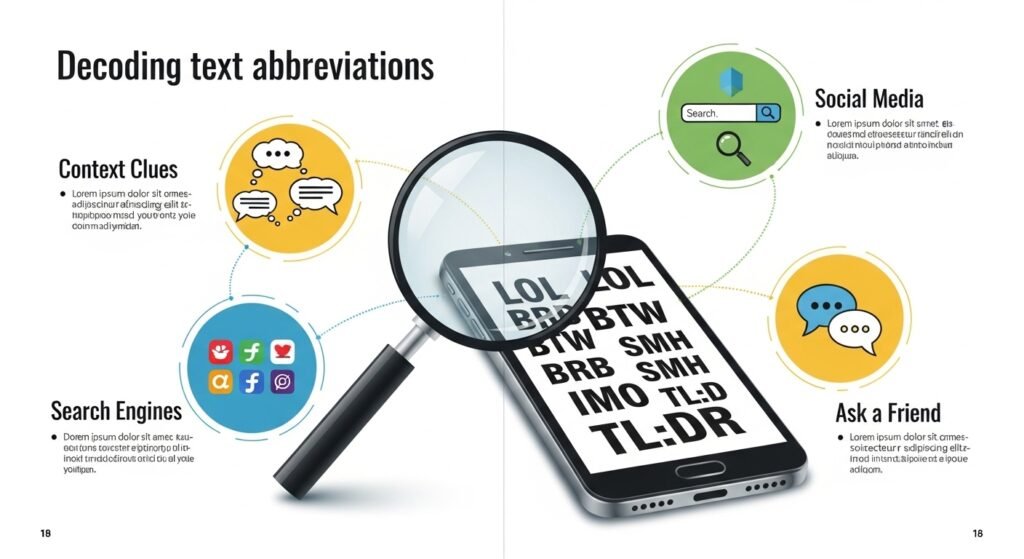
If you keep running into confusing acronyms like PTSO, you don’t need guesswork. You need a system.
Here’s how to approach it:
1. Read the full sentence
Never isolate the acronym. Meaning always sits in surrounding words.
2. Check the relationship
Is it a friend, stranger, group chat, or public comment?
3. Look for emotional tone
Is the message serious, joking, sarcastic, or informational?
4. Compare with known slang
Sometimes acronyms are variations or typos of existing ones.
5. Search context-first, not keyword-first
Instead of “PTSO meaning,” try “PTSO in WhatsApp chat example”
6. When all else fails, assume it’s niche
And ask the sender directly. Simple, but often the most accurate method.
Frequently Asked Questions About PTSO
What does PTSO mean in text messages?
PTSO is an ambiguous acronym used in informal chats, and its meaning depends heavily on context rather than a fixed definition.
Is PTSO a common slang term?
No. It is not widely standardized like common texting abbreviations and is considered rare or community-specific.
Where do people use PTSO?
It can appear in WhatsApp chats, Snapchat messages, TikTok comments, and informal online conversations.
Could PTSO have different meanings?
Yes. Like many internet acronyms, it can shift meaning depending on group usage, context, or even be a typo of another phrase.
How do I understand unknown text abbreviations?
Use context clues, check the relationship between users, and compare with known slang or dictionary sources like Urban Dictionary.
ptso meaning slang
In slang, “PTSO” usually means “Put That Sh*t On,” used to hype someone’s outfit, style, or appearance.
ptso meaning
“PTSO” can also stand for “Parent Teacher Student Organization,” a school-related group involving parents, teachers, and students.
what does ptso mean
Most commonly in texting, “PTSO” is slang for “Put That Sh*t On,” used to encourage or praise someone’s look or fashion.
ptso meaning text
In text messages, “PTSO” generally means a hype expression like “Put That Sh*t On,” but can also refer to a school organization in formal use.
what does ptso mean in text
In texting, “PTSO” is mostly used as slang meaning “Put That Sh*t On,” showing excitement or support for someone’s outfit or style.
Final Verdict What PTSO Really Means
Here’s the honest answer, stripped of hype.
PTSO does not have one universal meaning in text messaging.
It exists more as a flexible or unclear acronym used in specific digital spaces rather than a fixed entry in modern slang dictionaries.
That’s why it feels confusing. You’re not missing a “definition.” You’re dealing with a moving target.
So if you see it again, don’t stress over decoding it instantly. Look at the conversation around it. That’s where the real meaning always hides.
