You’re chatting with someone online, everything feels normal, then suddenly they send “DTTM.” That tiny four-letter message can instantly create confusion, drama, or even panic a little bit.
The DTTM meaning in text has become one of those modern internet slang terms that people keep seeing across messaging apps, gaming chats, and social media platforms, yet many still don’t fully understand it.
In most cases, DTTM means “Don’t Talk To Me.” Sounds simple enough, right? Well, not exactly. Digital communication is weird sometimes, and tone changes everything.
A person might use DTTM jokingly after you spoil a TV show, or they might genuinely need emotional space after a stressful day. That’s why understanding texting slang matters more today than it ever did before.
Modern online communication moves crazy fast. New internet acronyms appear almost daily, and if you miss one trend, suddenly everybody else sounds like they’re speaking another language.
This article breaks down the true meaning of DTTM, where it came from, how people actually use it, emotional context behind it, and why emojis completely change its tone.
What Does DTTM Mean in Text?
DTTM stands for “Don’t Talk To Me.” It is a popular piece of digital slang used in text messaging, social media conversations, online gaming chats, and casual online communication.
People usually send it when they:
- Feel annoyed
- Need personal space
- Want temporary silence
- Feel emotionally overwhelmed
- Joke around with friends
The phrase is short, direct, and emotionally expressive. Instead of typing a long explanation, people use this internet shorthand to quickly communicate mood or boundaries.
For example:
- “I just failed my exam. DTTM.”
- “You ate my fries? DTTM 😂”
- “Too much drama today honestly, DTTM.”
The exact meaning depends heavily on contextual tone. Sometimes it sounds harsh. Other times, it’s playful and unserious.
Why DTTM Became Popular Online
The internet loves speed. That’s basically the whole reason internet acronyms became mainstream in the first place. During the early years of mobile phones, typing long sentences was annoying and slow, so users created abbreviations to communicate faster.
Terms like:
- LOL
- BRB
- OMG
- IDC
- TTYL
all became normal parts of texting culture. DTTM followed the same pattern, though it carries stronger emotional weight compared to many casual abbreviations.
Here’s the thing though, younger internet users especially enjoy short emotional texting cues because they make conversations feel dramatic, funny, and expressive all at once. A four-letter acronym can now replace an entire paragraph, which feels kinda wild honestly.
Internet Acronyms Changed Digital Communication
Internet acronyms improve faster digital communication. That relationship helped shape modern online language. Today, people communicate through short emotional reactions instead of long explanations.
Social media platforms accelerated this trend because:
- Quick replies feel more natural
- Attention spans became shorter
- Mobile typing encourages shorthand
- Emotional reactions spread faster online
Apps like WhatsApp, Snapchat, Instagram, and Discord helped normalize casual messaging language even more.
The Emotional Meaning Behind DTTM
At first glance, DTTM looks rude. But emotionally, it often means much more than simple anger.
People use DTTM to express:
| Emotional State | Possible Meaning |
|---|---|
| Frustration | “I’m upset right now.” |
| Overwhelm | “I need mental space.” |
| Playful annoyance | “I’m jokingly mad.” |
| Embarrassment | “I can’t deal with this.” |
| Temporary boundaries | “Please give me time.” |
This emotional flexibility is why the phrase became so common in texting slang.
DTTM Often Signals Temporary Boundaries
Many people misunderstand DTTM because they assume it means permanent rejection. Usually, that’s not true at all.
DTTM expresses frustration or temporary boundaries. Most users simply want short-term emotional breathing room. In digital communication, people often react emotionally before calming down later.
For example:
- “I lost my wallet. DTTM.”
- “Why would you spoil the ending omg DTTM.”
- “No coffee this morning. DTTM world.”
Notice how some examples sound dramatic rather than serious? That’s because internet slang often exaggerates emotions for humor.
How DTTM Is Used in Everyday Conversations
The phrase appears in many real-life situations online. Some uses are serious, others are sarcastic or funny.
After Embarrassing Moments
People commonly use DTTM after awkward experiences.
Examples include:
- “Sent that text to the wrong person. DTTM.”
- “I waved back at someone who wasn’t waving at me. DTTM.”
- “Just tripped in public. DTTM forever.”
This use is usually self-deprecating humor rather than real anger.
During Playful Drama
Friends constantly use exaggerated online slang to tease each other.
Examples:
- “You didn’t save me pizza? DTTM 😭”
- “You support that football team? DTTM.”
- “Can’t believe you unfollowed me lol DTTM.”
In these cases, the phrase strengthens humor rather than conflict.
When Emotionally Overwhelmed
Sometimes DTTM carries genuine emotional exhaustion.
A person might say:
- “Too many notifications today. DTTM.”
- “Everything feels stressful honestly.”
- “Need silence for a while. DTTM.”
Here, the phrase acts almost like emotional self-protection.
How Emojis Completely Change the Meaning of DTTM
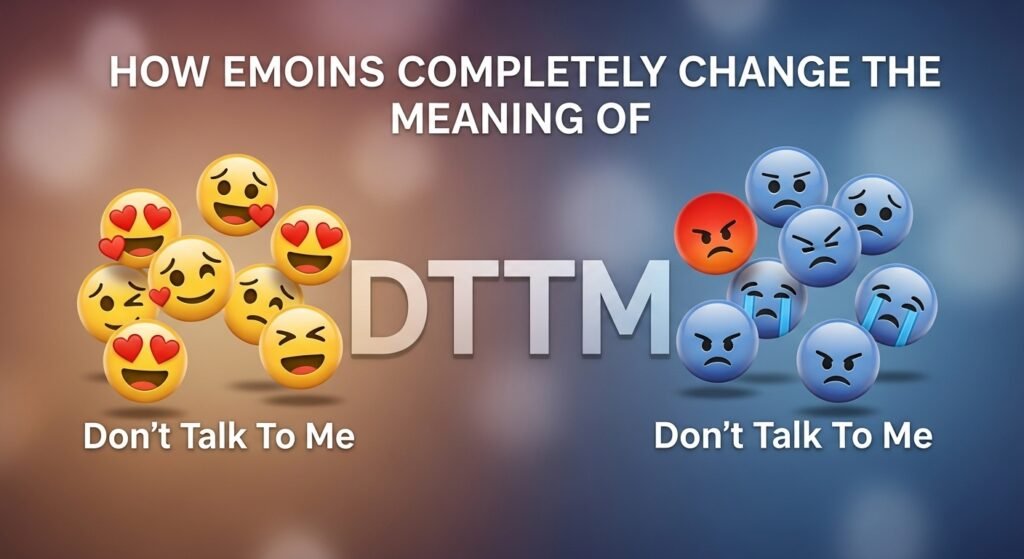
This is one area most articles barely explain properly. Emojis massively influence online communication, and they completely transform how DTTM feels emotionally.
Emojis change emotional tone of DTTM. Without emojis, the phrase may appear cold or aggressive. With emojis, it often becomes playful.
Here’s a simple breakdown:
| DTTM Version | Likely Tone |
|---|---|
| “DTTM.” | Serious or upset |
| “DTTM 😂” | Playful joking |
| “DTTM 😭” | Dramatic humor |
| “DTTM 😡” | Genuine anger |
| “DTTM lol” | Lighthearted annoyance |
This matters because digital communication lacks facial expressions and voice tone. Emojis help replace emotional cues people would normally hear in person.
Honestly, misunderstanding emoji tone causes online drama more often than people admit.
Why Tone Matters So Much in Text Messaging
Text messages remove body language completely. That means readers must guess emotional intent based only on words, punctuation, and emojis.
For example:
- “Fine.”
- “Fine 😂”
- “Fine lol”
- “Fine…”
Each version creates a different emotional feeling, even though the word stays the same.
DTTM works exactly the same way.
DTTM Across Different Platforms and Communities
Another overlooked topic is how online communities use DTTM differently depending on platform culture and age group.
DTTM on Social Media Platforms
On apps like TikTok or Instagram, users often use DTTM dramatically for entertainment.
Examples include:
- Reaction memes
- Funny captions
- Relationship jokes
- Celebrity gossip reactions
The phrase becomes performative there. Users exaggerate emotions because social engagement rewards dramatic reactions.
DTTM in Gaming Chats
Gaming communities use DTTM differently compared to casual texting.
In multiplayer games, it often appears after:
- Losing matches
- Bad teamwork
- Funny fails
- Technical mistakes
Gamers frequently use exaggerated emotional slang as comedic reactions rather than serious emotional statements.
Example:
- “We lost again? DTTM team 😭”
DTTM Among Different Age Groups
Teenagers and younger adults tend to use DTTM more casually and humorously. Older adults may interpret it more literally because they’re less familiar with modern texting culture.
That generational gap sometimes creates misunderstandings online, not gonna lie.
Similar Slang Terms Related to DTTM
Digital slang evolves through online communities and social media platforms. DTTM belongs to a much larger ecosystem of texting abbreviations.
Here are some closely related terms:
| Acronym | Meaning | Emotional Tone |
|---|---|---|
| IDC | I Don’t Care | Indifferent |
| DNM | Do Not Message | Direct |
| BRB | Be Right Back | Neutral |
| TTYL | Talk To You Later | Friendly |
| GTG | Got To Go | Casual exit |
| SMH | Shaking My Head | Disappointment |
The biggest difference is that DTTM carries emotional energy, while many others simply describe availability or reactions.
Common Misunderstandings About DTTM
People often misread internet shorthand because online communication lacks context.
Here are the biggest myths about DTTM.
Myth 1: DTTM Is Always Rude
Not true at all. Many users say it jokingly with friends. Tone matters more than the letters themselves.
Myth 2: It Means a Friendship Is Over
Usually, DTTM reflects temporary emotions rather than permanent relationship problems.
Myth 3: Only Teenagers Use It
Adults use texting slang constantly now, especially on social media platforms and messaging apps.
Myth 4: DTTM Always Means Anger
Sometimes it signals stress, embarrassment, playful drama, or emotional exhaustion instead.
Myth 5: It Means the Same Thing Everywhere
Different online communities interpret slang differently. Gaming chats, TikTok comments, and private texts all use DTTM differently sometimes.
Why Understanding DTTM Actually Matters
Some people think internet slang is meaningless nonsense, but honestly it shapes modern communication more than most realize.
Understanding phrases like DTTM helps you:
- Avoid misunderstandings
- Interpret emotional context
- Respond appropriately
- Navigate digital conversations better
- Recognize emotional boundaries online
In a world where conversations happen mostly through screens now, emotional interpretation became a genuine communication skill.
Online Slang Reflects Real Human Emotion
People sometimes dismiss digital slang as shallow. But many abbreviations reflect real emotions condensed into shorter forms.
Think about it:
Instead of typing:
“I’m overwhelmed and need some space right now.”
Someone simply says:
“DTTM.”
That shortcut communicates emotion instantly. Efficient? Yes. Perfect? Not always.
Still, it became part of modern online language because humans naturally simplify communication over time.
Should You Use DTTM Yourself?
You can, but context matters a lot.
Good Situations for Using DTTM
DTTM works best in:
- Casual chats with friends
- Funny online interactions
- Gaming conversations
- Informal group chats
- Lighthearted teasing
Situations Where You Should Avoid It
Avoid using DTTM in:
- Professional emails
- Workplace chats
- Serious arguments
- Formal communication
- Conversations requiring clarity
Without context, the phrase can sound unnecessarily harsh.
Better Alternatives Sometimes Work
If you genuinely need emotional space, clearer communication often works better.
For example:
- “I need some time alone.”
- “Can we talk later?”
- “Feeling overwhelmed right now.”
These feel less abrupt while still setting healthy boundaries.
The Psychology Behind Digital Shortcuts Like DTTM
There’s actually a psychological reason humans prefer shorthand online.
Fast digital environments reward:
- Quick emotional reactions
- Short responses
- Attention-grabbing phrases
- Memorable slang
- Social identity signals
Using internet acronyms also helps people feel connected to online communities. Shared slang creates a sense of belonging, kinda like insider language.
Digital Slang Evolves Constantly
Digital slang evolves through online communities and social media platforms. That’s why new abbreviations appear every year while older ones disappear.
A few years ago, certain slang terms dominated texting culture. Today, newer expressions replace them constantly because online language never stays still for long.
That evolution explains why many users search phrases like:
- “What does DTTM mean?”
- “DTTM meaning in text”
- “What is DTTM slang?”
- “DTTM texting meaning”
People simply want clarity before replying incorrectly.
Real-Life Examples of DTTM in Conversations

Here are natural examples showing different emotional tones.
Funny Usage
Friend: “I ate your snacks.”
Reply: “DTTM 😂”
Frustrated Usage
“I’ve had the worst day ever honestly. DTTM.”
Embarrassed Usage
“Accidentally liked a 3-year-old photo. DTTM.”
Gaming Usage
“We lost because of lag again. DTTM team 😭”
Temporary Boundary Usage
“Need some quiet today. DTTM for a bit.”
Notice how emotional interpretation changes every single time.
Is DTTM Toxic or Healthy?
The answer depends on intent and communication habits.
Using DTTM occasionally to express feelings or ask for space is usually harmless. But relying only on vague emotional shorthand can create misunderstandings if overused.
Healthy communication still matters more than internet slang.
Signs DTTM Is Being Used Playfully
- Includes laughing emojis
- Appears during jokes
- Happens in casual chats
- Quickly followed by normal conversation
Signs DTTM Might Be Serious
- No emojis or humor
- Appears after conflict
- Comes with emotional messages
- Followed by silence or withdrawal
Reading emotional context carefully helps avoid unnecessary drama.
Read Articul: https://brightsayings.com/thank-you-for-coming-to-my-party-2/
Online language will keep evolving no matter what. New slang emerges because internet culture constantly changes with trends, memes, apps, and younger generations.
Some acronyms survive for years. Others disappear almost overnight.
Still, emotional shorthand probably isn’t going anywhere. Humans naturally prefer faster communication, especially online where attention moves quickly.
DTTM may seem tiny, but it represents something much larger: the way digital communication reshapes emotional expression every single day.
Frequenetly Asked Questions
What does DTTM mean in texting?
DTTM usually means “Don’t Talk To Me.” People use it in casual online communication when they feel annoyed, overwhelmed, embarrassed, or jokingly dramatic. The emotional meaning changes depending on emojis, tone, and conversation context, which honestly matters more than the letters alone sometimes.
Is DTTM considered rude?
Not always. DTTM can sound rude if used seriously during arguments, but many people use it playfully with friends. Emojis and wording completely affect interpretation. A message like “DTTM 😂” feels much lighter than simply typing “DTTM.” without anything else added.
Where is DTTM commonly used online?
You’ll mostly find DTTM on social media platforms, gaming chats, texting apps, and group conversations. Apps like WhatsApp, Snapchat, Instagram, and Discord commonly feature this type of digital slang because fast emotional communication became normal in online culture nowadays.
Why do people search for DTTM meaning in text?
People search it because internet slang evolves very quickly, and many abbreviations confuse users. Understanding terms like DTTM helps prevent misunderstandings, improves digital communication, and allows people to respond appropriately without misreading emotional tone or online intent accidentally.
Meta Description:
DTTM meaning in text explained fully. Learn what DTTM means, emotional tone, slang usage, emojis, examples, and online communication context.
Final Thoughts on DTTM Meaning in Text
The DTTM meaning in text usually stands for “Don’t Talk To Me,” but the emotional meaning behind it depends heavily on context, tone, emojis, and platform culture.
Sometimes it signals real frustration. Other times, it’s playful drama between friends. Understanding those differences helps you navigate online communication more confidently and avoid unnecessary misunderstandings.
Modern texting slang isn’t just random internet nonsense anymore. It became a genuine language system shaped by speed, emotion, humor, and social interaction. And honestly, that system keeps evolving faster every year.
So next time someone sends “DTTM,” don’t panic instantly. Look at the conversation, check the emojis, and pay attention to the emotional vibe first. Those four letters might mean anger, humor, stress, or simply someone needing a little breathing room.
