You searched for MK meaning in text because someone probably sent you a message that simply said, “MK,” and now you’re staring at your screen wondering what they actually meant.
Were they agreeing with you?
Were they annoyed?
Did they end the conversation on purpose?
The frustrating part is that “MK” looks simple, but its meaning isn’t always as straightforward as it seems. In texting, social media chats, and messaging apps, a two-letter response can carry a surprising amount of emotional weight.
Here’s the quick answer:
MK usually means “okay,” “mm-kay,” or “I understand.” It’s commonly used as a casual acknowledgment in text messages. However, the tone can range from friendly agreement to mild frustration depending on the context of the conversation.
That’s where things get interesting.
Let’s break down exactly what MK means, when people use it, and how to tell whether it’s a harmless reply or something more.
What Does MK Mean in Text?
The Simple Definition
At its core, MK is a shortened version of “okay.”
When someone sends “MK,” they’re typically communicating one of the following:
- Okay
- Got it
- I understand
- Sounds good
- Fine
Think of it as a quick acknowledgment response. Instead of typing a full sentence, the sender uses a short chat abbreviation to confirm they’ve received your message.
For example:
You: “The meeting starts at 3 PM.”
Them: “MK”
Translation:
“Okay, I understand.”
In most situations, that’s all it means.
Why People Use MK Instead of OK
Texting culture rewards speed.
People constantly shorten words, remove vowels, and create new texting slang. MK fits naturally into that pattern.
Common reasons people use MK include:
- Faster typing
- Casual communication style
- Habit from social media usage
- Preference for shorter responses
- Influence from friends or online communities
For many users, especially younger generations, MK simply feels more conversational than OK.
The Hidden Meaning Behind MK
This is where context becomes everything.
The same two letters can communicate entirely different emotions depending on who sends them and when.
Neutral Agreement
Most of the time, MK represents straightforward agreement.
Examples:
Friend: “I’ll pick you up at 7.”
You: “MK”
Or:
Coworker: “I’ve sent the report.”
You: “MK, thanks.”
In these cases, there’s no hidden agenda. It’s simply a neutral reply.
Passive Acceptance
Sometimes MK communicates acceptance without enthusiasm.
Imagine this conversation:
You: “We’re changing our plans tonight.”
Friend: “MK.”
Notice the difference.
The friend isn’t arguing. They’re accepting the change. Yet the response lacks excitement.
This is what communication experts often call passive acceptance. The message isn’t negative, but it isn’t particularly positive either.
Mild Frustration or Annoyance
Now things get more nuanced.
Suppose you had an argument earlier.
Person A: “I still think I’m right.”
Person B: “MK.”
Suddenly, MK doesn’t feel like agreement.
It feels dismissive.
The sender may be signaling:
- Frustration
- Emotional distance
- Lack of interest in continuing the discussion
- Passive-aggressive communication
The word itself hasn’t changed.
The context has.
Conversation Ending Signal
Many people use MK as a subtle way to close a conversation.
Example:
You: “I explained everything.”
Them: “MK.”
No follow-up question.
No emoji.
No additional comment.
The message often communicates:
“I’ve heard what you said, and I don’t have anything else to add.”
That doesn’t necessarily mean they’re upset. It may simply mean the discussion has reached its natural conclusion.
Is MK Rude or Polite?
One of the most common questions people ask is whether MK is rude.
The honest answer?
Sometimes.
When MK Feels Friendly
MK usually feels friendly when:
- The conversation is casual
- Emojis are included
- Both people regularly use short replies
- There is no existing tension
Examples:
- “MK lol”
- “MK sounds good”
- “MK thanks”
- “MK 😊”
The added context softens the message.
When MK Sounds Cold
MK can feel cold when:
- It appears after a disagreement
- It’s the only response given
- The sender normally writes longer messages
- The conversation involves emotional topics
Example:
You: “Can we talk about what happened yesterday?”
Them: “MK.”
Most people would interpret that differently than a cheerful agreement.
Factors That Affect Tone
Several factors influence how MK is perceived.
Punctuation
Compare these versions:
- MK
- MK.
- MK…
- MK!!
Each creates a different emotional impression.
Emojis
Emojis dramatically alter tone.
Examples:
- MK 😊 = Friendly
- MK 👍 = Agreement
- MK 😒 = Annoyed
- MK 😑 = Uninterested
Relationship
The same message may feel different depending on who sends it.
A close friend saying MK often feels normal.
A romantic partner replying with only MK after an argument may feel very different.
Conversation History
Tone rarely exists in isolation.
Always evaluate the messages that came before.
MK vs OK vs K vs Alright
Many people wonder whether MK differs from other acknowledgment responses.
Here’s a useful comparison:
| Response | Typical Tone |
|---|---|
| OK | Neutral |
| MK | Casual and context-dependent |
| K | Often colder or more abrupt |
| Alright | Friendly and conversational |
| Sounds good | Positive and engaged |
Notice where MK sits.
It’s more casual than OK but usually less harsh than a single-letter K.
That’s why so many misunderstandings happen.
MK Meaning Across Different Platforms
The platform often shapes how people communicate.
MK on Snapchat
On Snapchat, MK usually means:
- Okay
- Got it
- Understood
Because conversations move quickly, short responses are common and generally not considered rude.
MK on Instagram
In Instagram DMs, MK often functions as a casual reply.
Examples include:
- Confirming plans
- Responding to stories
- Acknowledging information
Tone remains highly dependent on context.
MK on WhatsApp
WhatsApp conversations tend to be more personal.
Because people often have longer discussions there, an isolated MK can sometimes feel more abrupt than it would on Snapchat.
MK on TikTok
TikTok users frequently adopt trending internet slang.
In comments and direct messages, MK typically means okay or mmkay.
MK in Gaming Chats
Gaming communities prioritize speed.
MK often serves as a quick confirmation:
- Ready
- Understood
- Let’s go
- Okay
Players generally view it as practical rather than emotional.
Real-Life Examples of MK in Text Conversations
Friends
Friend: “Movie starts at 8.”
You: “MK.”
Simple agreement.
Dating
Partner: “We need to talk later.”
Response: “MK.”
This could indicate understanding, nervousness, annoyance, or emotional distance.
Context matters.
Family
Parent: “Dinner is ready.”
Child: “MK.”
A common acknowledgment response.
Group Chats
Group Member: “Meeting moved to Thursday.”
Several Replies:
- MK
- OK
- Got it
- 👍
All serve the same purpose.
Workplace Messaging
Professional communication usually benefits from more complete responses.
Instead of:
MK
Consider:
- “Understood.”
- “Sounds good.”
- “Got it, thanks.”
These responses appear more polished and professional.
Alternative Meanings of MK
While texting slang is the most common interpretation, MK can have several other meanings.
Mortal Kombat
Gamers often use MK as shorthand for the popular fighting game franchise Mortal Kombat.
Example:
“Are you playing MK tonight?”
Here, MK clearly refers to the game.
Michael Kors
In fashion discussions, MK may refer to the luxury brand Michael Kors.
Example:
“I bought a new MK bag.”
Personal Initials
Sometimes MK simply represents someone’s initials.
For example:
- Mary Kelly
- Michael King
- Megan Knight
Context-Based Meanings
Always consider the surrounding conversation.
The same abbreviation can mean completely different things depending on the topic being discussed.
How Should You Respond to MK?
If It Means Agreement
Keep the conversation moving.
Examples:
- “Perfect.”
- “See you then.”
- “Great.”
If It Sounds Annoyed
Avoid making assumptions.
You can gently check in:
- “Everything okay?”
- “Did I miss something?”
- “Just wanted to make sure we’re on the same page.”
If You Need Clarification
Sometimes the simplest approach works best.
Ask directly:
- “What do you mean by MK?”
- “Just checking, are you okay with that?”
Most misunderstandings disappear quickly when people communicate openly.
Best Response Examples
Depending on the situation:
- Thanks!
- Sounds good.
- Appreciate it.
- See you soon.
- Great, talk later.
- Got it.
Choose the response that matches the conversation’s tone.
Common Misunderstandings About MK
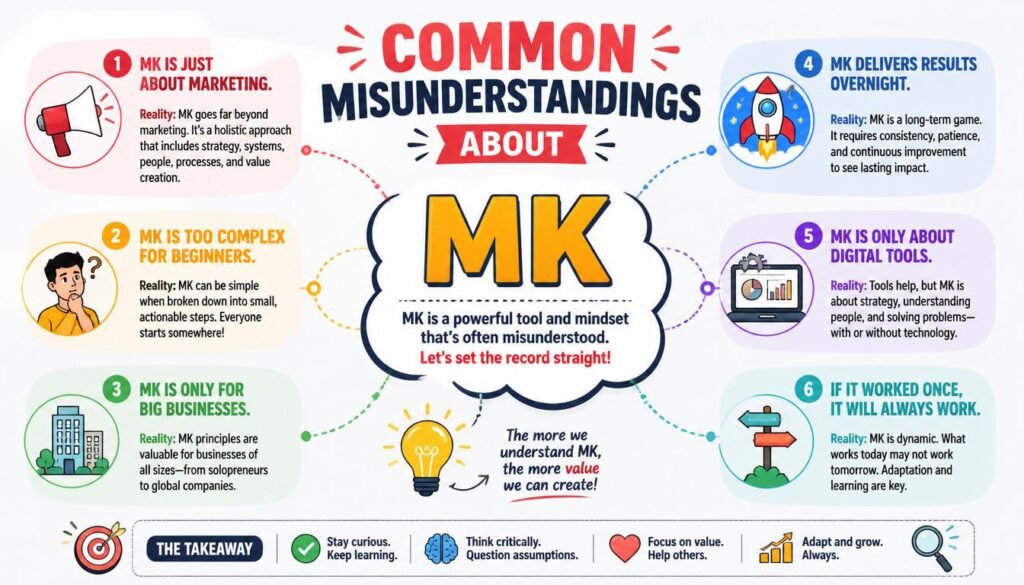
MK Always Means Anger
False.
Most uses of MK are completely neutral.
MK Is Always Rude
Also false.
Millions of people use MK casually without any negative intent.
MK Ends Conversations
Not necessarily.
Many users simply employ it as a quick acknowledgment.
MK Is Only Gen Z Slang
Not anymore.
People across multiple age groups now use MK in text messages and online conversations.
Frequently Asked Questions
What does MK mean in a text message?
MK usually means “okay,” “mm-kay,” or “I understand.” It functions as a casual acknowledgment or agreement in text messaging.
Is MK rude in texting?
Not inherently. However, depending on the tone and context, MK can appear dismissive, uninterested, or passive-aggressive.
What is the difference between MK and OK?
OK is generally viewed as neutral and standard. MK feels more casual and can carry additional emotional nuance.
What does MK mean on Snapchat?
On Snapchat, MK usually means “okay” and serves as a quick acknowledgment response during fast-moving conversations.
Why do people reply with MK?
People use MK to save time, acknowledge information, confirm understanding, or indicate that no further discussion is necessary.
Does MK mean someone is angry?
Not usually. However, if MK appears after an argument or emotionally charged discussion, it may signal frustration or emotional distance.
Final Thoughts
The real secret behind MK meaning in text isn’t hidden in the letters themselves. It’s hidden in the conversation around them.
Most of the time, MK simply means “okay.”
That’s it.
Yet tone, relationship dynamics, previous messages, emojis, and communication habits can transform a simple acknowledgment into something that feels friendly, indifferent, annoyed, or even passive-aggressive.
The next time someone sends you “MK,” don’t focus only on the abbreviation. Look at the context. That’s where the real meaning lives.
