
There was a moment—kinda ordinary, late night, scrolling on phone—that everything about digital media felt slightly… bendy. You know that feeling when your brain goes “wait, that’s not possible” but your eyes are like “yeah it is tho”? That was my first real encounter with Video face swap, and honestly, it felt like someone had quietly rewritten the rules of reality while nobody was watching.
It started with a short clip, nothing fancy. A laughing face, then suddenly another face layered on top, moving too perfectly, blinking too naturally, like it always belonged there. That’s when I first stumbled into AI face swap platform demos and the world of AI face swapping technology, and it wasn’t just entertainment anymore—it was a new language of visual expression, half art, half machine logic, slightly glitchy but strangely human.
And yeah, I remember thinking: “this is either genius or mildly cursed… maybe both.”
But behind the playful memes and viral clips, there’s a deeper machinery running—facial feature analysis, motion tracking, and layers of deep learning systems quietly trying to understand what makes a face… a face.
What is Video Face Swap and Why It Feels Kinda Unreal
At its simplest, Video face swap is the process of replacing one person’s face in a video with another, while preserving expressions, lighting, and movement. But that simple sentence hides a very chaotic storm of computation.
Modern face replacement systems rely on computer vision to detect key facial regions—eyes, nose, mouth, jawline—and then map them using facial landmarks. From there, a system builds a kind of digital mask, or sometimes even a full 3D face model, that bends and reacts frame by frame.
What makes it feel unreal is the consistency. The swapped face doesn’t just sit there—it breathes, reacts, slightly smirks at jokes it didn’t hear. That illusion is powered by frame-by-frame processing, face alignment algorithms, and subtle lighting condition adaptation that tries to match shadows like it’s doing emotional impersonation of physics.
Some people use it for GIF face swap, others for full cinematic edits. Either way, the result is a swapped face output that can look so real your brain does a double-take and goes “uhh okay, I guess that’s normal now?”
Inside AI Face Swap Platforms and Their Quiet Magic
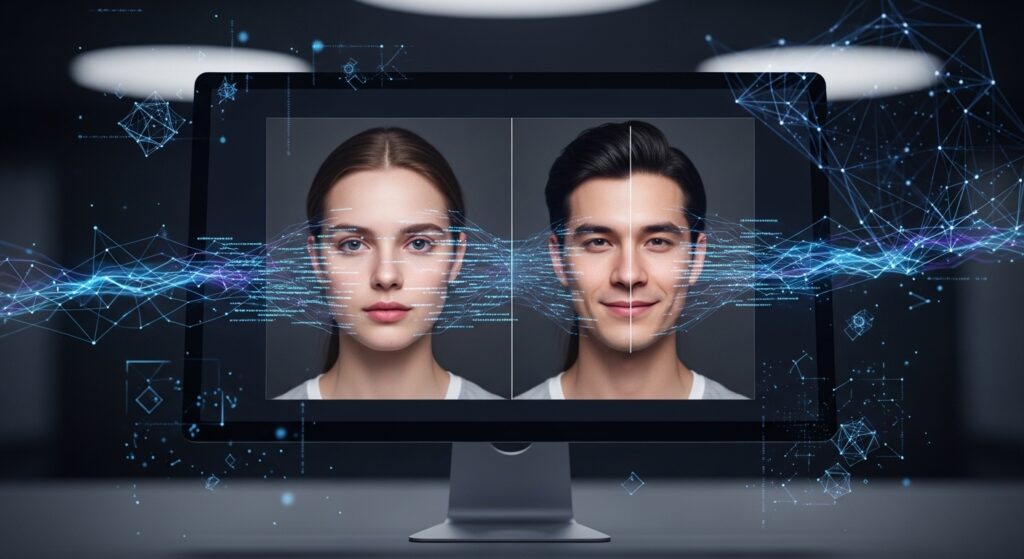
If you peek under the hood of an AI face swap platform, it feels less like software and more like a layered conversation between machines.
First, there’s image-to-video synthesis, where a still identity is injected into motion. Then comes video rendering pipeline stages that refine textures, stabilize edges, and smooth out weird artifacts that scream “I was generated by a computer pls ignore me.”
The system constantly adjusts angle correction, because faces rarely stay polite and front-facing in real life. It also uses expression mapping, so when the original actor smiles awkwardly, the swapped identity smiles in the exact same emotional shape, just… borrowed.
Some advanced tools even simulate facial animation AI, blending muscle movement patterns to maintain realism. That’s where things get eerie and impressive at the same time.
And yeah, not gonna lie, sometimes it still glitches. A blink that’s half a second off. A smile that arrives slightly too late. But those imperfections? They’re part of the charm, like digital fingerprints.
How AI Face Swapping Technology Actually Works (Without Feeling Like a Textbook)
Let’s break it down without making it feel like a lecture at 8am nobody signed up for.
At the core, AI face swapping technology depends on neural networks trained on massive datasets of human faces. These systems learn patterns—how cheeks move when someone laughs, how eyes narrow when squinting in sunlight, how jaws shift during speech.
This is where deep learning and computer vision applications merge into something almost artistic.
The pipeline usually goes like this:
- The system detects faces using facial recognition logic (not identity matching, but structure mapping)
- It extracts facial landmarks and builds a geometry map
- It applies a 3D face model to understand depth and perspective
- It performs expression transfer from source to target
- It uses frame interpolation AI to smooth transitions
- Finally, it renders everything into a cohesive video
All this happens through a video manipulation tools ecosystem that feels invisible but incredibly complex.
And somewhere in that pipeline, identity becomes flexible. Not erased, but translated.
That’s why people sometimes describe it as digital identity manipulation or human likeness mapping. Sounds heavy, but also kinda poetic in a weird tech way.
Video Face Swap in Entertainment and Social Media Content Creation
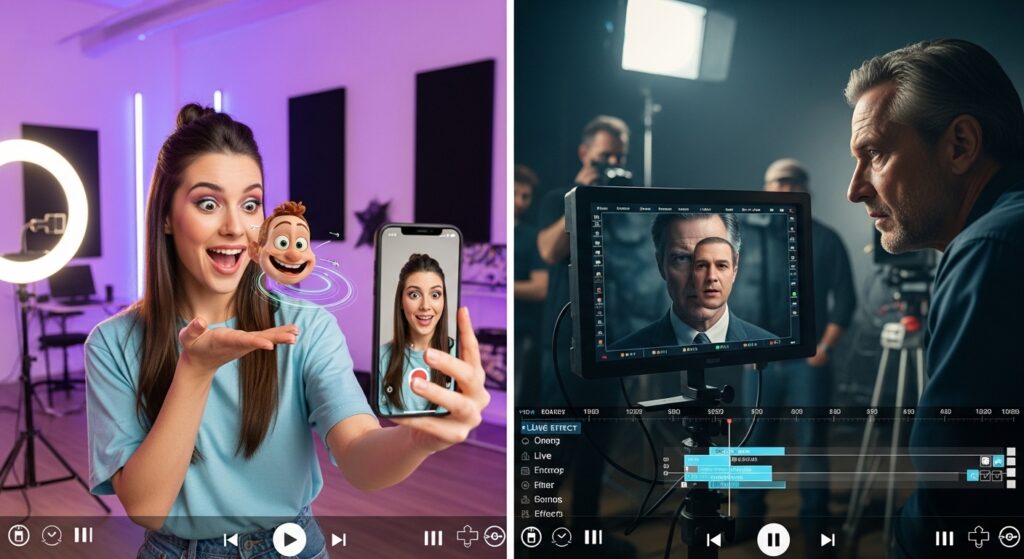
If there’s one place where Video face swap really exploded, it’s entertainment.
- Meme creators use it for humorous video generation, swapping celebrities into absurd scenarios that shouldn’t exist but somehow do.
- Influencers experiment with social media content creation, testing alternate personas or comedic identity flips.
- Filmmakers explore virtual actor replacement, reducing reshoots and expanding creative freedom.
- Short-form creators build creative storytelling arcs where characters literally transform mid-scene.
- Viral pages push meme creation boundaries where historical figures suddenly dance to pop music.
- Fans recreate movie scenes using realistic face swap effects just for fun.
- Some even build entire parody channels using influencer-style content replication.
What’s fascinating is how audiences stopped asking “is this real?” and started asking “is this funny or not?”
That shift alone changed the internet.
Marketing Content and the Rise of Personalized Video
Brands didn’t take long to notice.
In modern marketing content, face replacement AI is used to generate personalized ads where different viewers see slightly different versions of the same campaign. That’s advertisement personalization powered by automation.
A single shoot can become hundreds of variations using AI-generated media pipelines. The same spokesperson can be digitally adapted to different demographics, languages, or cultural styles without reshooting everything.
This is where content personalization AI and media automation tools start reshaping advertising economics.
Companies now experiment with AI video editing, reducing production costs while increasing output speed. It’s efficient… but also slightly unsettling when overused.
Because somewhere in there, authenticity becomes a negotiable concept.
Education, Training, and Interactive Learning Videos
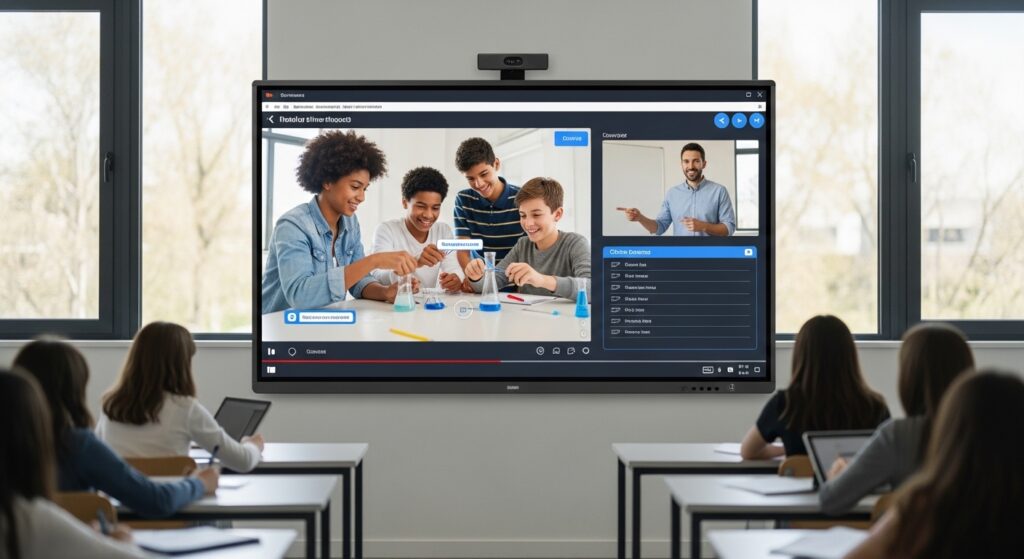
Not everything about Video face swap is chaotic internet humor.
In Education & Training, the technology is being used for interactive learning videos and instructional media enhancement. Imagine historical figures “speaking” directly to students using facial reenactment and synthetic video generation.
Teachers experiment with engagement-driven learning tools, where a familiar face helps explain complex topics. The idea is simple: humans learn better when they feel connected to the speaker.
Some platforms even use AI-driven content personalization so learners receive customized video tutors with adaptive expressions.
It’s still early, but the potential is kind of wild.
Creative Storytelling and Identity Transformation in Video
This is where things get artistic.
With Creative storytelling, Video face swap becomes a tool for character transformation and narrative visualization. A single actor can play multiple identities within the same scene using facial transformation tools.
Filmmakers explore multimodal video generation, blending real footage with synthetic identity layers. It’s like storytelling but with shifting masks.
You’ll see experiments in human-AI interaction in media, where digital actors respond dynamically to narrative cues.
And yeah, sometimes it feels like watching reality remix itself in real time.
Ethical AI Usage, Consent, and the Shadow Side
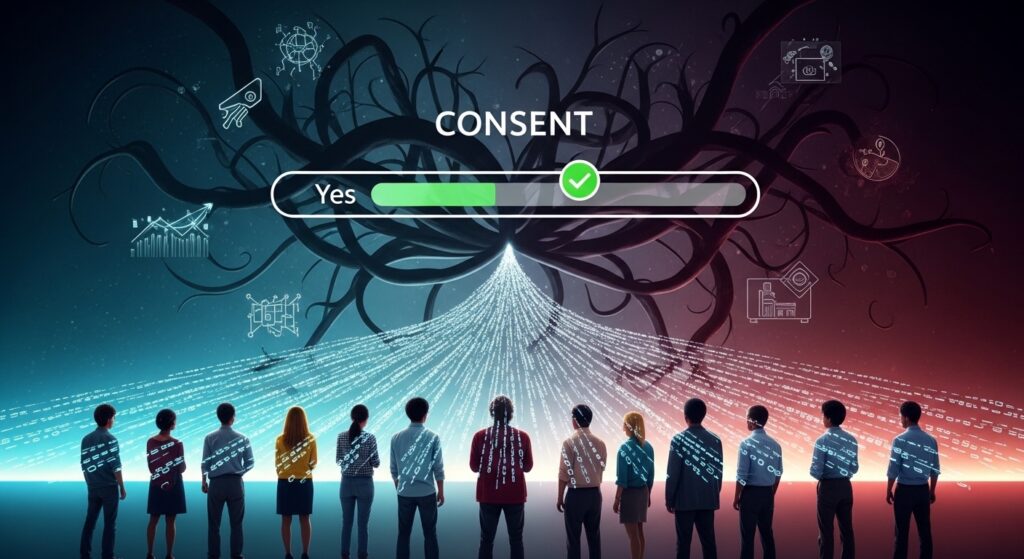
Now we gotta talk about the serious part, even if it’s less fun.
With great AI-powered storytelling comes questions around consent in digital media, likeness rights, and privacy laws. Because if someone’s face can be swapped into any video, who owns that identity?
There are growing concerns about unauthorized face usage, especially in viral contexts. That’s where deepfake misuse risk becomes a real issue.
Ethical frameworks now emphasize content transparency, including watermarking and disclaimers in AI-generated content.
We’re basically learning, in real time, how to handle synthetic media creation responsibly.
And honestly, the tech isn’t the villain—it’s how it’s used that decides everything.
Step-by-Step Workflow of Realistic Face Swap
Let’s walk through how a typical system actually builds a result:
- It starts with a source video (the original footage)
- Then a target video provides the identity to insert
- The system runs facial feature analysis
- It detects facial landmarks and aligns geometry
- A face alignment algorithms layer stabilizes orientation
- Motion tracking captures movement across frames
- Frame-by-frame processing applies transformations
- Lighting condition adaptation ensures consistency
- Finally, the system outputs the face replacement result
The final product is a seamless illusion of continuity—sometimes too seamless for comfort.
That’s where visual realism enhancement plays its biggest role.
Future of Synthetic Media Creation
Looking ahead, video content creation is heading toward full automation ecosystems.
We’re already seeing early forms of image-to-video transformation, where static images become animated sequences with realistic motion. Combine that with neural face rendering, and you get entirely new types of digital content.
Future systems may integrate context-aware visual adaptation, where faces react not just to motion but emotional context.
And yes, digital avatar creation might eventually replace traditional filming in some sectors of entertainment and marketing.
But it won’t erase human creativity—it’ll just remix it in stranger ways.
Conclusion: When Faces Become Stories
So here we are, living in a world where faces can travel across videos, identities can be remapped, and storytelling can bend reality just enough to feel like dreaming while awake.
Video face swap isn’t just a tool anymore—it’s part of a bigger shift in how we understand media, identity, and creativity itself. Whether used for humor, education, marketing, or pure artistic exploration, it sits at the intersection of imagination and computation.
And maybe that’s the real takeaway: technology didn’t replace the face, it just gave it more ways to speak.
If you’ve ever tried an AI face swap platform, or watched a realistic face swap clip that made you question your eyes for a second, you already know—this space is only getting weirder, more creative, and more human in unexpected ways.
If you want, you can share your thoughts or experiences with AI face swapping technology—the funny ones, the creepy ones, or the surprisingly emotional ones. Because honestly, everyone’s first reaction to it is slightly different… and that’s what makes it interesting in the first place.
